Overview
Best Temp Mail (best-tempmail.com) is a disposable email service built around one idea: verification mail should arrive in seconds and disappear afterwards. It ships as three connected products — an Android app, a website, and a developer API — all sharing one mail infrastructure.
The problem
Most temp-mail services are a web form over a shared, slow inbox. Codes arrive late or not at all because deliverability is an afterthought, and there is no way to carry an inbox from the phone to the desktop. Developers who need throwaway addresses for test suites are left screen-scraping an ad-covered page. The product had to fix all three: real delivery, continuity across devices, and a proper API.
Approach
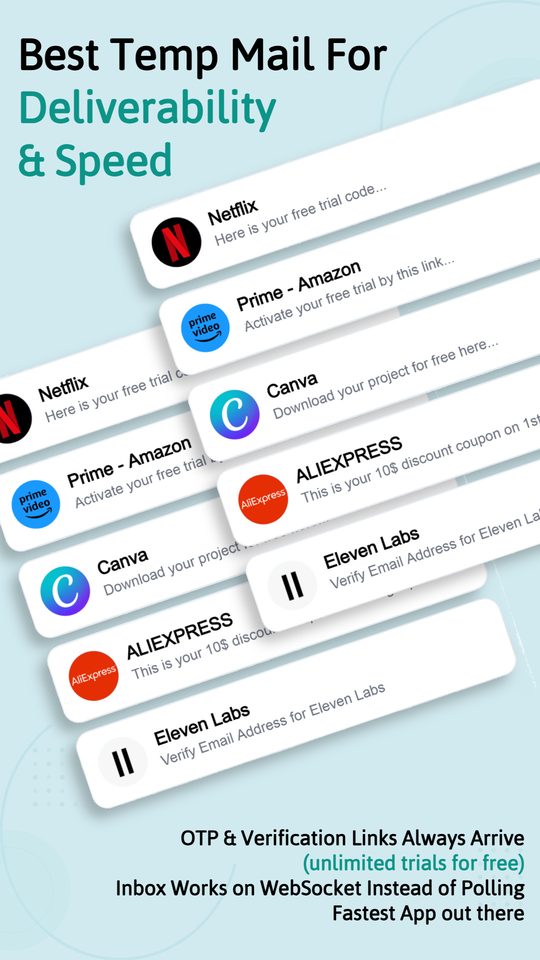
- Made deliverability a first-class concern — correct SPF/DKIM/DMARC on rotated sender domains, so OTP mail lands in the inbox rather than a spam folder.
- Pushed mail to the client over WebSocket instead of polling, so messages appear the moment they are received; Firebase Cloud Messaging covers the app-in-background case.
- Built QR inbox sync: scan from the app and the same temporary inbox opens on the website, with no account and no login.
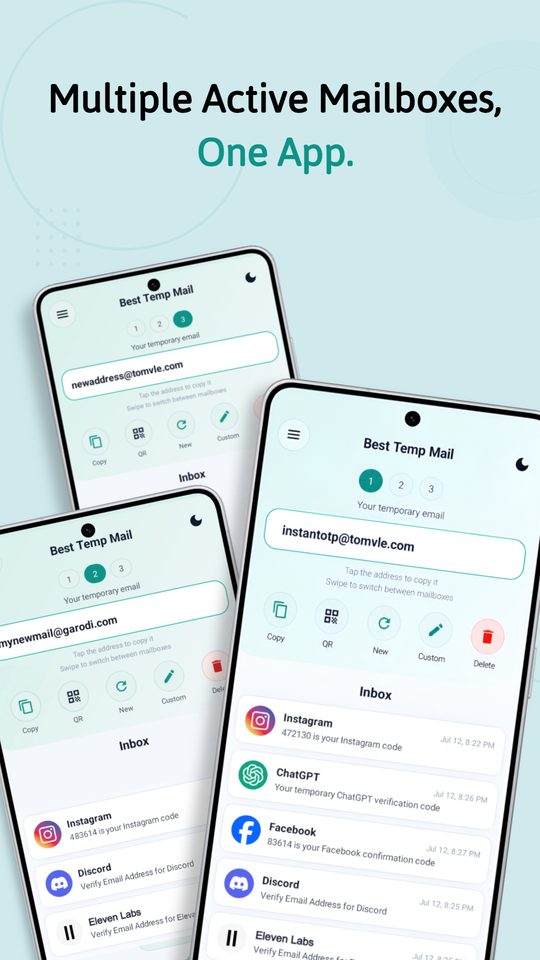
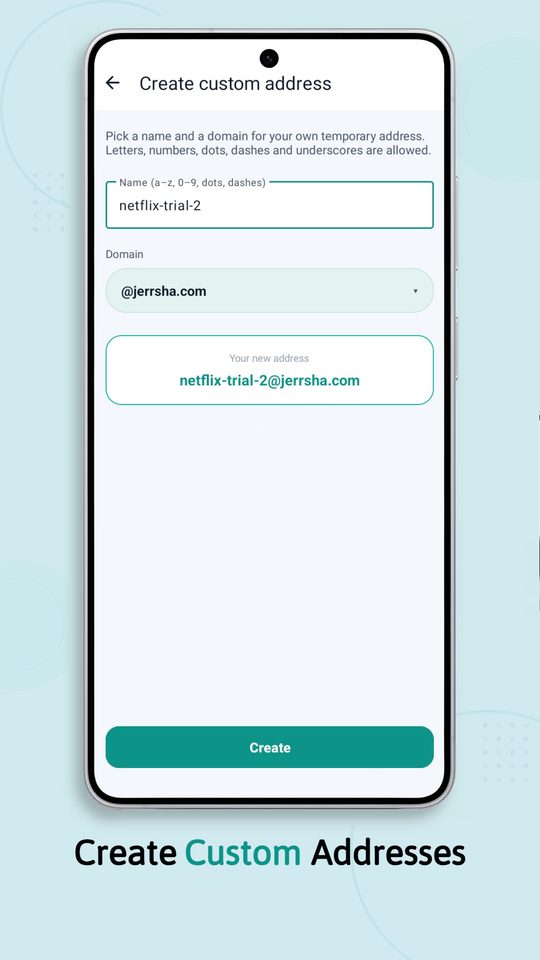
- Supported up to three active mailboxes, custom local parts, domain selection and swipe-to-delete, with automatic expiry that permanently removes data.
- Implemented a real Android Autofill service using the official Autofill Framework, off by default and scoped only to offering the temp address.
- Shipped a public API — inbox creation, message read, long-poll
/wait, OTP and action-link extraction, webhooks with HMAC signing, plus Node and Python SDKs and an MCP server for AI assistants. - Handled the Play compliance surface properly: ads disclosure, data-safety form, privacy policy and permissions all matching what the app actually does.
Result
A live, multi-surface product: an Android app with instant OTP delivery and push notifications, a website offering the same inbox in the browser, and an API adopted for automated signup and verification-code testing in CI. The service is listed across launch directories and runs entirely without user accounts — anonymity is the architecture, not a toggle.